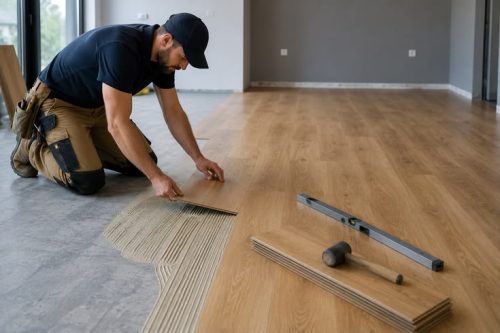
Most homeowners spend weeks choosing between hardwood, vinyl and tile — then choose the color in twenty minutes at the showroom. It is backwards. Material determines how your floor performs. Color determines how your house feels every single day, and it is the decision people regret most.
Here is how to get it right, based on what actually holds up in Southlake, Colleyville, Grapevine and Westlake homes.
Light vs Dark Floors: The Honest Trade-Offs
Neither is objectively better. They fail in opposite directions, and the right answer depends on your house and your tolerance for cleaning.
Dark floors
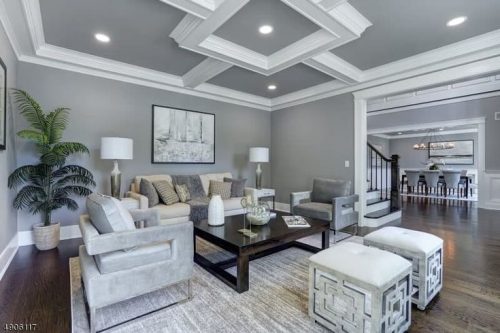
What they do well: create drama, make a room feel grounded and expensive, and pair beautifully with white or light cabinetry. Espresso, walnut and dark oak tones still photograph better than anything else.
What they cost you: dark floors show everything. Dust, pet hair, footprints, and the fine light-colored dust that is a permanent fact of life in North Texas. A dark floor that looks flawless in a showroom will need sweeping every other day in a real family home. They also visually shrink a room and absorb light, which matters in rooms with only one window.
Light floors
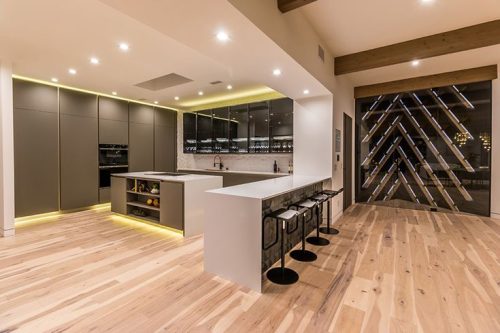
What they do well: hide dust remarkably well, make spaces feel larger and brighter, and work with almost any wall color. Light oak, natural, blonde and white-washed tones have dominated new DFW construction for the last several years for exactly this reason.
What they cost you: they show dark scuffs, mud, and dropped coffee more clearly. They can also read as flat or washed out if the plank has no visible grain — a light floor needs texture and character or it looks like a builder-grade default.
Mid-tone floors
This is where most homeowners should land and few consider. Medium browns, natural oak, and greige tones hide both light dust and dark scuffs better than either extreme. They are the most forgiving choice in a house with kids, dogs, or heavy traffic, and they are the least likely to look dated in five years.
The Texas-Specific Factor Nobody Mentions
DFW homes deal with fine, pale dust year-round, and homes near new construction get it far worse. This single fact should influence your color choice more than any design trend.
If you have large windows facing south or west, strong afternoon sun will also wash out and warm up your floor color significantly. A cool gray plank that looks perfect under showroom LEDs can read distinctly beige in a sunlit Southlake living room at 4pm. Always view samples in your own home, in your own light.
Should Flooring Be the Same Throughout the House?
This is the single most common question we get, and the answer has shifted in recent years.
The case for one continuous floor
Running the same flooring through the entry, living areas, hallways, kitchen and bedrooms is now the standard in higher-end DFW homes, and there are real reasons beyond aesthetics:
- It makes the entire home feel larger — every transition strip visually chops a house into smaller pieces.
- It photographs better, which matters directly at resale.
- Fewer transitions means fewer failure points and easier cleaning.
- You can often buy material more efficiently in one large order.
Where it is reasonable to change
Continuity does not mean the entire house. It is completely normal — and often better — to switch flooring in:
- Bathrooms. Tile is the right answer in wet rooms, and no one expects continuity here.
- Laundry and mudrooms. Same logic.
- Bedrooms, if you specifically want carpet for warmth and sound.
- Fully separated spaces like a finished garage, guest suite or upstairs game room where a door or full staircase creates a natural break.
The rule that works: change flooring only where there is a door or a genuine architectural break. Never change materials in the middle of an open sightline. A transition strip running across an open-concept living area is the fastest way to make a house look chopped up and cheaply finished.
If you do use two floors, tie them together
They do not need to match, but they must share an undertone. A cool gray tile next to a warm honey oak will look like an accident. Keep both warm or both cool, and keep the value (lightness) within a reasonable range of each other.
Matching Floor Color to Your Cabinets
The kitchen is where floor color decisions get tested hardest, because your floor and cabinets meet along a long, visible line.
- White cabinets: the most flexible. Mid-tone and dark floors both create strong, clean contrast. Very light floors can work but risk looking washed out — make sure the plank has visible grain.
- Gray cabinets: stay in the cool family. Greige, light gray-brown and cool natural oak floors pair well. Avoid strongly orange or red-toned wood.
- Dark or navy cabinets: go lighter on the floor. Dark cabinets plus dark floors closes a room in fast unless you have exceptional natural light.
- Oak or honey wood cabinets: avoid matching the floor to the cabinet tone. Two similar-but-not-identical woods next to each other always look like a mistake. Go clearly lighter or clearly darker instead.
The general principle: contrast beats matching. Floors and cabinets in nearly the same shade look flat and unintentional. Separate them by a clear step.
Which Colors Actually Hold Their Value at Resale?
If you plan to sell within five to seven years, this matters.
Natural, light-to-mid oak tones are currently the safest choice in the DFW market — they read as current, they photograph well in listings, and they appeal to the widest range of buyers. Very dark espresso floors, which dominated a decade ago, now read as dated to many buyers. Heavily gray-washed floors have also passed their peak; the market has moved toward warmer neutrals.
Strongly red-toned woods and high-gloss finishes are the two choices most likely to work against you at resale.
Finish Matters as Much as Color
Two floors in the identical color can look completely different depending on finish:
- Matte: hides scratches and dust far better than gloss. The default recommendation for most families.
- Satin: slight sheen, still forgiving. A good middle ground.
- Gloss: shows every scratch, footprint and speck of dust. Beautiful for about a week.
- Wire-brushed or textured: the best performer in high-traffic homes. The texture disguises wear and adds character to light floors that would otherwise look flat.
How to Test a Floor Color Before You Commit
- Take home the largest samples you can get — a small chip cannot show you how a color reads across an entire room.
- Lay them flat on the existing floor, never hold them upright. Floors are viewed from above.
- Look at them in morning light, mid-afternoon sun, and at night under your own lights.
- Place them next to your cabinets, your trim, and your largest piece of furniture.
- Live with them for at least three days. Almost every color regret comes from a same-day decision.
Frequently Asked Questions
Do dark floors make a room look smaller?
Yes, generally. Dark floors absorb light and visually pull walls inward. In smaller rooms or rooms with limited natural light, a lighter floor will make the space feel noticeably larger.
Should my floor be lighter or darker than my walls?
Darker, in most cases. A floor darker than the walls grounds a room and feels natural to the eye. Floors lighter than the walls can work, but it takes deliberate design to avoid looking top-heavy.
Is gray flooring still in style in 2026?
Cool, heavily gray-washed floors have declined significantly. Greige and warm-neutral tones have replaced them and are far safer if you care about how the floor will look in five years.
Can I use the same flooring in the kitchen and living room?
Yes, and you should. Modern waterproof vinyl and properly finished hardwood both handle kitchen conditions well, and running one floor through both spaces is the single easiest way to make an open-concept home feel larger.
What color flooring hides dirt best?
Mid-tone floors with visible grain or texture. Solid, uniform colors — whether very light or very dark — show the most. Variation in the plank is what disguises everyday dirt.
See the Samples in Your Own Home
Floor color is one of the few decisions a photo genuinely cannot settle. We bring full-size samples directly to your home so you can see them in your actual light, against your actual cabinets, before you commit to anything.
Serving Southlake, Colleyville, Grapevine, Westlake, Trophy Club, Keller and the surrounding DFW area with free in-home consultation and measurement.